
AI is changing how we build software.
-
- Requirements move faster
- Designs are created faster
- Code is generated faster
- Features change faster
- Releases happen faster
But there is a risk:
If quality engineering continues with yesterday’s processes, QA becomes the bottleneck to AI-powered delivery. That is the real QA disruption. The industry is already moving toward AI-driven and agentic approaches that reshape the STLC from script-heavy, reactive testing toward adaptive, continuous quality engineering.
The shift is bigger than test automation
Traditional QA has largely focused on validating what was built. AI-era QE needs to engineer quality throughout the lifecycle.
The shift is from:
-
- Manual test creation → AI-driven test design
- Script-heavy automation → Intent-driven automation
- Brittle scripts → Adaptive automation
- Full regression → Risk-based intelligent regression
- Defect reporting → AI-driven analysis and insights
- Reactive testing → Predictive quality engineering
- Testing at the end → Quality throughout the lifecycle
AI-Powered STLC:
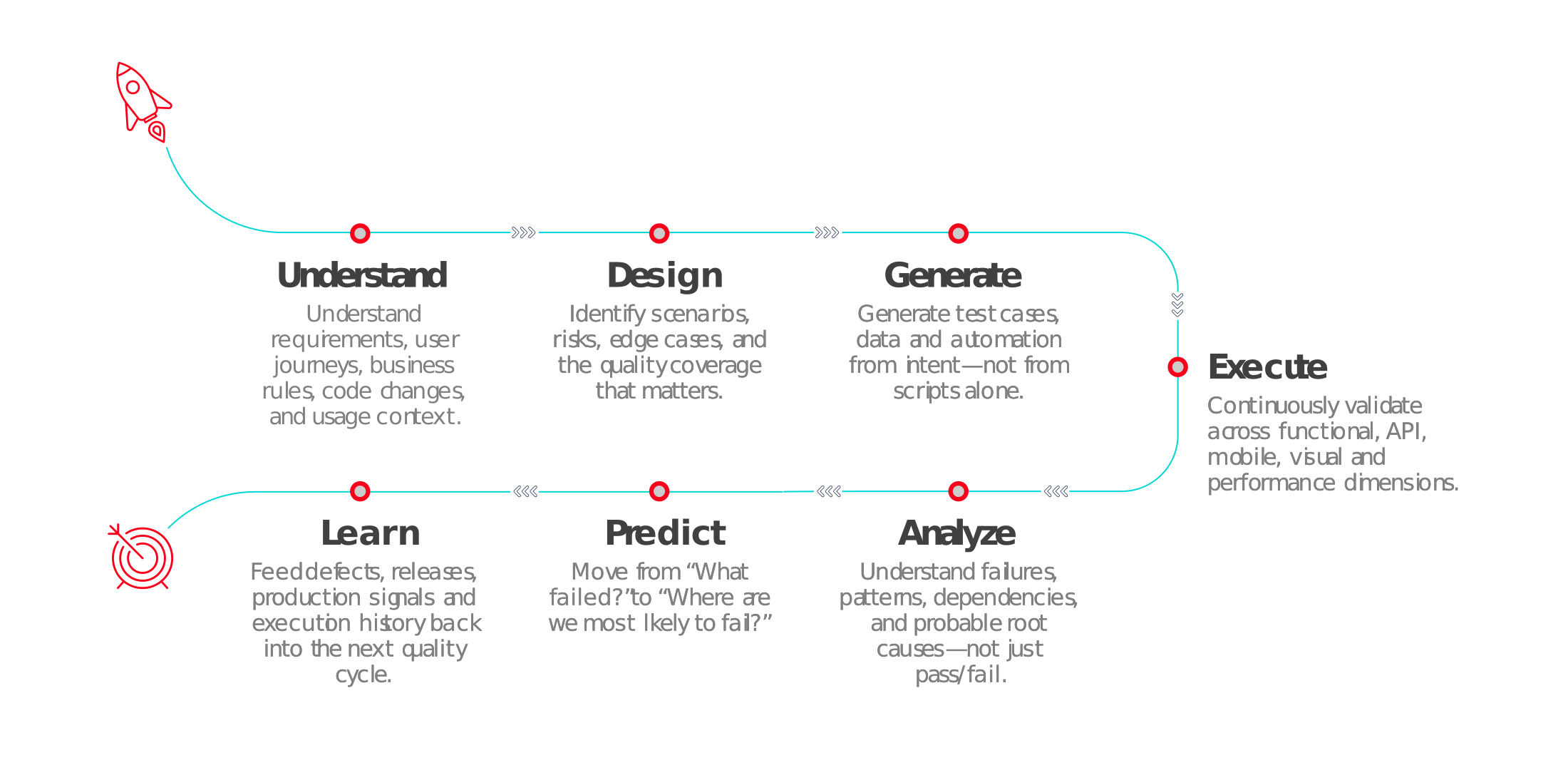 That is a very different STLC. It aligns with adaptive execution, and an intelligence layer working together across the quality lifecycle.
The QA CoE needs to change
An AI-ready QA CoE cannot simply be a larger automation factory. It needs to become a Quality Intelligence capability.
The focus moves from:
-
- Test volume → Risk and coverage
- Automation percentage → Engineering impact
- Defect counts → Quality intelligence
- Regression execution → Intelligent validation
- Tool expertise → AI orchestration and problem-solving
- Release testing → Continuous quality
The objective is simple: faster releases, without increasing quality risk.
Our transformation model reflects this progression—from foundation and adoption to AI CoE maturity, where quality engineers move toward proactive analytics and AI-driven test design.
Roles will change too
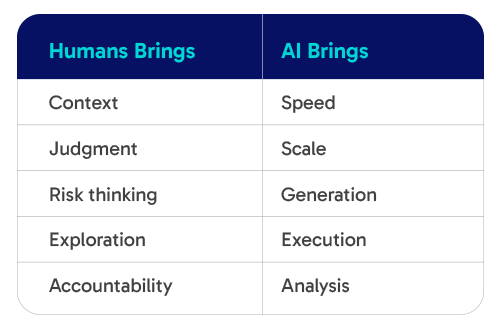
AI will automate parts of testing. But the bigger change is what we expect from people. The QA engineer increasingly becomes someone who can think about quality, orchestrate AI and make better engineering decisions.
What should a modern QE CoE measure?
A modern QE COE should not be measured by how much testing it does. It should be measured by how much uncertainty it removes.
QE CEO Measurement criteria:
-
- Predictability — See risk before it becomes a defect.
- Adaptability — Keep quality ahead of application change.
- Coverage intelligence — Test what matters, not everything.
- Release confidence — Make faster, evidence-based decisions.
- Resilience — Learn and improve after every release.
- Business impact — Accelerate delivery without increasing customer risk.
This is the direction of a more closed-loop QE model, where requirements, testing, defects and production signals continuously feed quality decisions and future releases.
At Neurealm, we firmly believe that simply adding AI layers to existing testing processes does not improve the testing process. The quality lifecycle itself reimagining. And this has led to the genesis of NeuGAIN’s AI-powered quality intelligence platform. Our platform brings together capabilities aligned to a broader AI-powered STLC vision.
-
- AI-driven test design.
- Intent-driven automation.
- Adaptive execution.
- Intelligent regression.
- Visual and performance validation.
- Quality intelligence.
- Human judgement.
- Governance.
Our philosophy is simple:
AI should amplify human intelligence. Quality should not slow innovation.
Testing should become proactive and intelligent—not reactive and brittle.
The bigger shift
AI is making software engineering faster. QA cannot be the function that asks engineering to wait.
The answer cannot simply be more testers. It cannot be more automation. It cannot be another AI testing tool.
Modern QE requires a modern operating framework.
If you are rethinking your QA CoE for the AI era, get a demo of NeuGAIN’s STLC Platform and see how Neurealm is envisioning the next chapter of Quality Engineering.

Author
Manisha Deshpande | Engineering Practice Leader | Neurealm
Manisha brings over 25 years of experience in the IT industry and currently serves as the VP – Engineering at Neurealm. She advocates a design-led mindset and a human-centric approach to product development. Her expertise spans the entire product engineering lifecycle, with a current focus on digital modernization, mobile-first experiences, and leveraging AI to enhance engineering productivity and innovation.

Author
Ashok Santhanam | Director – Practice | Neurealm
Ashok Santhanam is Director – Practice at Neurealm, with over 20 years of experience in the IT industry. He specializes in modernizing the software testing lifecycle using cutting-edge artificial intelligence, focusing on intelligent regression, smart automation, and Mobile Agentic Studio to elevate quality engineering standards.
