Ensuring safety, reliability, and performance
with comprehensive Automotive Validation Services.
Automotive Validation Services
Overview
Our Automotive Validation Services provide end-to-end testing solutions tailored for modern automotive systems. We specialize in Autonomous Driving Validation, ensuring safe and reliable operation in complex scenarios. Our services also include BSP Validation of Automotive SoCs to optimize hardware-software integration. With a focus on Model-in-the-Loop (MIL) and Software-in-the-Loop (SIL) testing, we deliver robust validation processes that meet industry standards and accelerate development for next-generation automotive technologies.
Do it right with Neurealm
Expertise
- Conducting thorough testing across various stages of software development to ensure quality and reliability.
- Ensuring compliance with ISO 26262 standards for functional safety in automotive systems.
- Applying MISRA compliance practices to meet stringent automotive safety goals.
- Utilizing MCDC (Modified Condition/Decision Coverage) to guarantee extensive test coverage.
- Autonomous Driving Validation to ensure safety and performance in autonomous driving systems.
- BSP (Board Support Package) Validation of Automotive SoCs to optimize integration and compatibility.
- Performing Model-in-the-Loop (MIL) and Software-in-the-Loop (SIL) testing to validate software components and systems in a controlled environment.
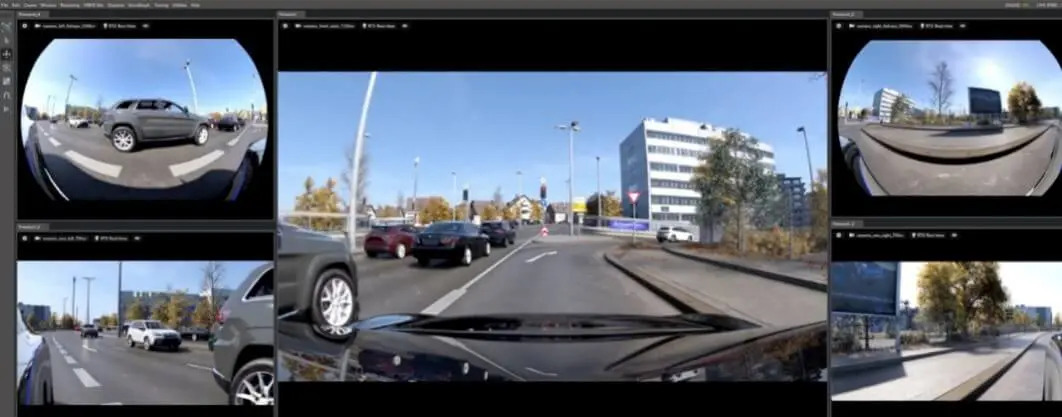
Autonomous Driving Validation
Generation of AD scenarios with synthetically generated photo-realistic video
- Initializing complex road scenarios using DRIVE Sim to replicate real-world driving conditions.
- Generating realistic datasets by randomizing parameters such as time of day, object shadows on roads, speed variations of ego and other vehicles, collision approach trajectories, and positions of Vulnerable Road Users (VRUs).
- Utilizing precise car models and accurate camera setups for high-fidelity simulation.
- Simulating vehicle motion through HSDL (High-Speed Driving Logic) to create realistic interactions and behaviors.
- Configuring and simulating camera parameters in USD format across all 8 cameras on the test vehicle for comprehensive vision testing.
- Employing pre-defined HD Maps to ensure accurate representation of road networks and environments in simulations.
BSP Validation of Automotive SoC
- Unit Testing for QNX BSP Components: Developing and executing unit tests for BSP components to ensure 100% coverage of unit requirements and design. This includes creating unit test specifications from unit requirements and design, updating headers, and maintaining traceability to SWUD fragment IDs. Migrating test cases to the Giza environment for streamlined testing.
- Integration Testing for Software Components: Performing comprehensive integration testing to validate functionality, stress, and performance of software components. Developing integration test specifications from requirements, architecture, design, and APIs to ensure alignment with system expectations.
- Fuzz Testing for Software Components: Conducting fuzz testing to identify vulnerabilities and enhance robustness, including feature additions and bug fixes. Utilizing the Dumb Fuzzer algorithm to automate fuzz testing and generate detailed reports for continuous improvement.
- MISRA/CERT-C Compliance: Ensuring adherence to safety and security standards by identifying and addressing mandatory, required, and advisory violations through Coverity scans. Remediating violations based on MISRA-C 2012 and CERT-C guidelines to uphold code quality and reliability.
- Architecture & Traceability: Engaging in AUTOSAR activities, implementing functional changes, and maintaining traceability to SWAD fragments. Conducting code inspections in alignment with safety, security, and general best practices to validate the architecture and integrity of the BSP and overall SoC environment.
ADAS Feature Validation
- Comprehensive ADAS Feature Validation: Validating a range of Advanced Driver Assistance Systems (ADAS) features, including Adaptive Cruise Control, Advanced Emergency Braking, and Traffic Jam Pilot to ensure robust performance and safety.
- Model-in-the-Loop (MIL) and Software-in-the-Loop (SIL) Testing: Conducting both MIL and SIL testing to verify ADAS functionalities in a controlled environment, allowing early detection of issues and refinement of feature performance.
- Custom Test Framework Development: Creating a tailored test framework using tools like Synopsys TPT, AV Simulation SCANeR, and MATLAB/Simulink to facilitate precise and efficient testing workflows.
- Utilization of TPT for MIL and SIL Validation: Leveraging TPT to seamlessly conduct MIL and SIL validations, providing a flexible and powerful environment for comprehensive ADAS feature testing.
- Realistic Testing with Vehicle Models from SCANeR: Implementing actual vehicle models from SCANeR for high-fidelity simulations, allowing realistic validation of ADAS features.
- Enhanced Test Coverage with TPT: Using TPT to easily expand test case coverage, increasing the depth and breadth of validation efforts for reliable ADAS feature performance.
Tools