
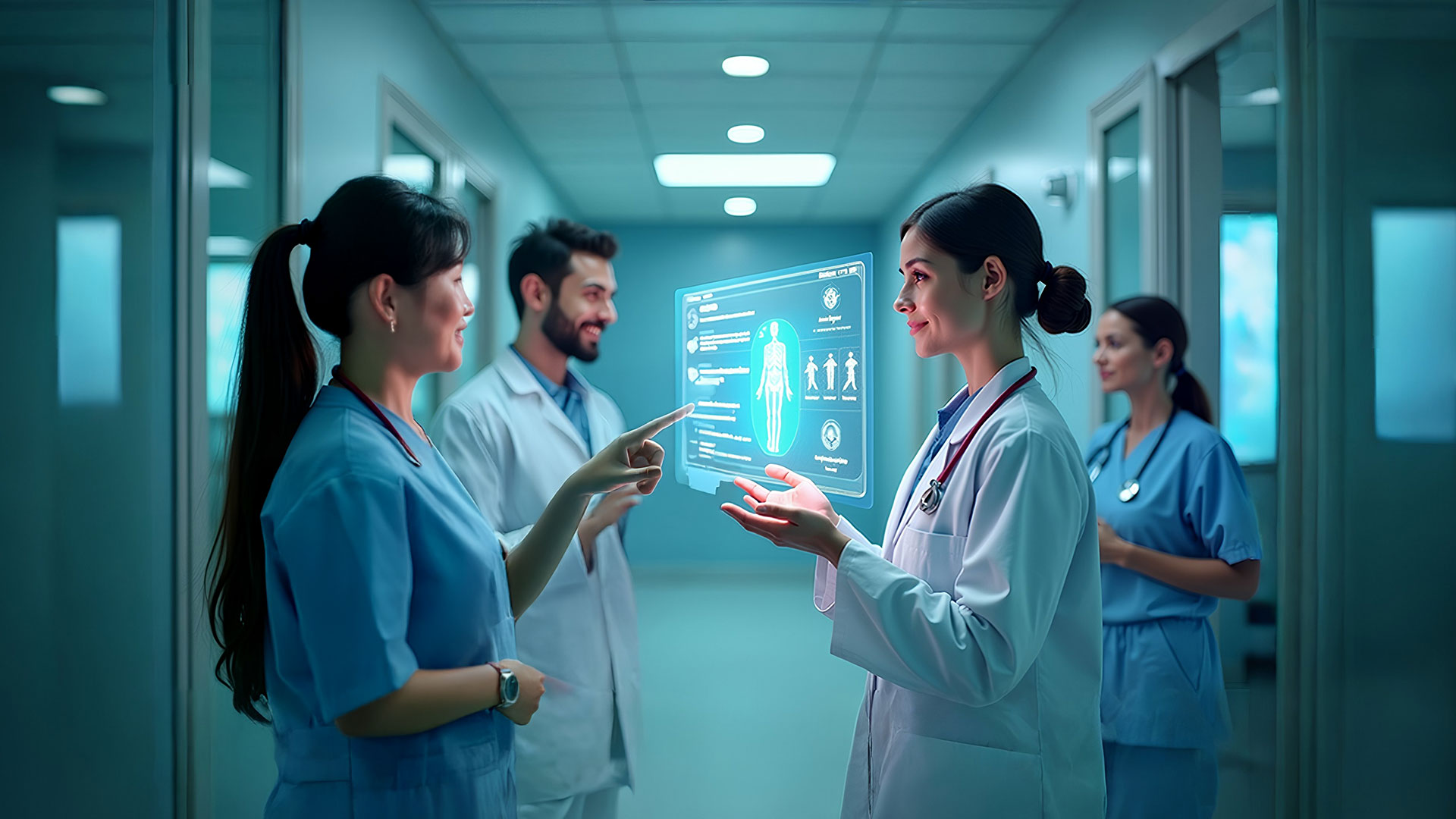
Healthcare has undergone a profound transformation, shifting from a traditional ‘fix-it-when-it’s-broken’ (sick care) model to a holistic approach focused on sustained health and wellness. This evolution is fundamentally driven by a convergence of advanced technologies, moving beyond simple mobile apps to create a truly connected care ecosystem. It empowers individuals to take an active charge of their health.
I see this transition unfolding across three distinct stages: Reactive Healthcare, Preventive Healthcare, and Holistic Wellbeing. Thanks to rapidly advancing technology, data, AI, and intuitive user experiences, health information for decision making is becoming more accessible and personalized, offering unique opportunities to improve lives.
Let’s explore each of these stages in more detail.
1. Reactive Healthcare: The Emergency Room Model
- Patient Access & Convenience
- Smart symptom checkers: AI-driven tools provide quick, clear guidance for the right level of care.
- Streamlined booking: Digital platforms offer real-time, stress-free appointment scheduling.
- Accessible telemedicine: Secure video platforms make virtual consultations fast and convenient.
- Diagnosis & Treatment Support
- AI-powered diagnostics: Machine learning helps doctors interpret medical images with greater speed and accuracy.
- Personalized treatments: Data analytics tailors drug and therapy plans to each patient’s unique profile.
- Optimized medications: Algorithms fine-tune dosages to maximize efficacy and minimize side effects.
- Healthcare System Efficiency
- Efficient resource allocation: Technology optimizes hospital beds and staff for smoother operations.
- Automation: AI automates tasks, personalizes engagement and supports clinical decisions, freeing physicians to focus on direct patient care.
- Accessibility & Urgency
- Inclusive design: User-friendly interfaces with large fonts, voice input, and similar features ensure accessibility for all.
- Direct calls to action: Clear, prominent buttons provide an immediate path to address urgent situations.
At Neurealm, we are partnering with our customers to engineer solutions that streamline emergency care. This includes:
- Building solutions using cloud-based electronic patient care reporting (ePCR) to help EMS agencies improve documentation accuracy and speed.
- Creating platforms that bring together providers, payors and patients.
- Optimizing AI-powered hospital workflows to manage resources, reduce wait times, and automate operational tasks.
- Modernizing leading hospital chains, enabling them to go paperless.
- Managing hospital infrastructure through SOC/NOC implementations.
2. Preventive Healthcare: Stopping Illness Before It Starts
This stage focuses on preventing specific diseases or detecting them early. It involves proactive measures like regular check-ups, screenings, vaccinations, and lifestyle modifications aimed at mitigating risk factors before they manifest into full-blown conditions.
Technology’s role in empowering individuals to stay ahead of illness:
- Continuous Monitoring & Data Collection
- Remote patient monitoring: Mobile apps connected to wearables transmit real-time data to doctors, enabling continuous health monitoring.
- Early issue detection: AI analyzes wearable data streams to spot subtle health changes before symptoms even appear.
- Prevention & Proactive Care
- Preventive care scheduling: Mobile apps automate appointments for health screenings, making it easy to stay on top of regular check-ups.
- Personalized risk assessment: Data, including genetic and lifestyle information, help identify individuals at higher risk for certain diseases.
- Treatment Adherence & Support
- Intelligent medication reminders: Personalized reminders ensure patients take the right dose at the right time, improving adherence.
- Digital therapeutics: Highly personalized nudges and custom content help patients manage chronic conditions and improve habits.
- Virtual health coaches: AI-powered coaches offer tailored advice on diet, exercise, and stress, adapting to a user’s progress.
- Insight & Empowerment
- Clear data visualization: Complex health data is shown in simple charts and graphs, helping users understand their trends at a glance.
- Unified health view: Apps consolidate data from wearables, pharmacies, and medical records for a complete health picture.
- Customized recommendations: Apps tailor content and recommendations for each user, from diet plans to exercise routines.
Together with its customers, Neurealm has built data and analytics platforms that help identify the right patient cohort for clinical trials and generate valuable insights. Our work includes:
- Innovative diagnostic apps and smart device integrations like remote urine analysis for at-home cancer patients and remote monitoring of blood biomarkers without the need for needles or implants.
- Platforms that leverage data to recommend health insurance plans, empowering people to make informed choices about coverage.
3. Holistic Wellbeing: Thriving in Every Dimension
The ultimate stage transcends physical health to encompass mental, emotional, social, and spiritual well-being. It’s about nurturing a state, where individuals not only avoid illness but actively thrive and find fulfillment in all aspects of their lives.
Technology’s role in empowering a fulfilling life:
- Creating a Safe & Supportive Environment
- Mindfulness apps: Calm interfaces and gentle sounds create a supportive space for meditation and journaling.
- Soothing UX: Designed with calming color palettes, supportive language, and clear interfaces to reduce stress.
- Data security: Robust protections and transparent privacy policies build trust for sharing sensitive information.
- Early Understanding & Detection
- AI chatbots: Conversational agents provide empathetic support and guide users through therapeutic exercises like CBT (cognitive behavioural therapy).
- Sentiment analysis: AI analyzes user language to detect subtle emotional distress or mood shifts.
- Holistic data view: Apps integrate sleep, activity, and social engagement data to give a complete picture of wellbeing.
- Personalized Support & Interventions
- Digital interventions: Structured, evidence-based coping strategies and mood tracking help manage stress and anxiety.
- Personalized interventions: Data-driven routines (e.g., sleep hygiene plans, meditation recommendations) address unique user needs.
- Motivation & Long-Term Engagement
- Gamification: Badges, leaderboards, and rewards keep users engaged in their self-care journey.
- Positive reinforcement: Platforms celebrate progress with insights and feedback, focusing on growth rather than deficits.
In line with this, we have partnered with our customers to develop specialized solutions for digital mental health support, maternity care, elderly and home care, and nutritional apps. Our team has worked on solution integrations that utilize voice biomarkers to detect mental health conditions and smart wearables to detect sleep patterns and correlate them for continued well-being.
Conclusion
Advanced AI/ML models drive continuous innovation and simultaneously accelerate quick prototypes and product engineering across the entire lifecycle. This dual impact of AI ensures that hyper-personalized treatments and optimized solutions reach patients faster than ever before.
Technology fundamentally empowers individuals, bringing us closer to a future where a truly healthy, fulfilling life is within everyone’s reach. We, at Neurealm, are partnering with our customers to build applications and platforms that address various aspects of the care spectrum, contributing to a powerful vision for healthcare.
Please reach out to learn more success stories!

Author
Manisha Deshpande | VP, Digital Platform Engineering | Neurealm
Manisha brings over 25 years of experience in the IT industry and currently serves as the VP of Digital Platform Engineering at Neurealm. She advocates a design-led mindset and a human-centric approach to product development. Her expertise spans the entire product engineering lifecycle, with a current focus on digital modernization, mobile-first experiences, and leveraging AI to enhance engineering productivity and innovation.